Reviewing the Funny Carpenters Woodworkers Design
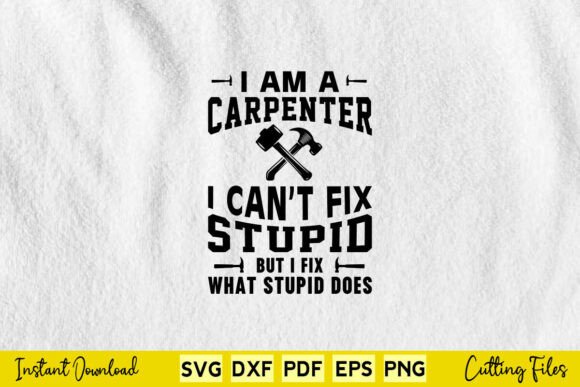
As an embroidery designer who has spent countless hours digitizing and stitching out files for clients, I have learned that not every graphic translates well to thread. When I first encountered the Funny Carpenters Woodworkers design, my initial reaction was one of cautious optimism. The phrase "I Fix What Stupid Does" carries a bold, humorous personality that resonates deeply with the woodworking community. However, translating this wit into a tangible embroidery project requires more than just downloading a file; it demands an understanding of how text-heavy graphics behave under the needle.
This review is written for fellow Etsy sellers, craft business owners, and hobbyists who want to ensure their handmade product looks professional before they commit to production. Whether you are creating a personalized gift for a father figure or stocking your small shop product line with witty apparel, understanding the nuances of this digital embroidery file is crucial for success.
First Impressions and Visual Personality
The mood of the Funny Carpenters Woodworkers design is unapologetically rugged and humorous. It appeals directly to those who take pride in their craftsmanship while acknowledging the chaos that often surrounds DIY projects. Visually, the layout relies heavily on typography. In the world of Crafts and Graphics, text-based designs are tricky because legibility is paramount. If the letters are too thin or the spacing too tight, the message gets lost in the stitch density.
From a designer’s perspective, the charm lies in its simplicity. It does not require complex shading or intricate applique design work. Instead, it relies on clean lines and strong contrast. This makes it versatile for various design assets, but it also means there is nowhere to hide poor digitizing. The visual personality suggests durability and humor, making it a natural fit for items that see daily use, such as aprons or work shirts.
Real-World Application: The Custom Sweatshirt Scenario
To truly evaluate this design, I imagined a real-life scenario: a customer orders a custom sweatshirt embroidery piece for their husband, a weekend warrior who loves building furniture but often leaves tools everywhere. The goal is to create a holiday embroidery gift that is both funny and wearable.
In this context, the Funny Carpenters Woodworkers design performs well because it centers attention on the chest area, where the text is most readable. Unlike complex images that might distort on curved surfaces, straightforward lettering holds its shape better on knit fabrics. However, the choice of thread becomes critical. A matte cotton thread might blend too much with a heathered gray sweatshirt, whereas a high-sheen rayon or polyester thread would provide the necessary pop to make the joke land immediately. This attention to detail elevates the finished product from a simple printed shirt to a valued custom apparel item.
Navigating Fabric and Hoop Constraints
One must consider where this design should be used carefully. While it is marketed for t-shirts, mugs, and pillows, embroidery has physical limitations that printing does not. For instance, placing this design on a tote bag design made of canvas is ideal. The sturdy fabric supports the stitch density required for bold lettering without puckering. Conversely, using it on thin, stretchy fabric like a lightweight jersey tee requires significant stabilization.
If you are working with a small hoop size, you must check the scaling. Shrinking the design too much to fit a 4x4 hoop could cause the letters to merge, turning clear text into a blob of thread. Always test the design on scrap fabric first. This is non-negotiable for professional results. Check the thread colors against your fabric background. On dark fabrics, you may need to use a lighter thread color or add an underlay to prevent the fabric from showing through the stitches.
For items like caps or curved surfaces, the rigidity of the text can be challenging. A flat fill stitch or satin stitch border might pull differently on a curved brim than on a flat panel. If you are creating an embroidered patch instead of direct-to-garment stitching, you have more control over the stabilizer and backing, which can result in a cleaner look for this type of graphic.
Enhancing Brand Consistency and Customer Trust
For commercial embroidery professionals, consistency is key. Using a well-digitized file like Funny Carpenters Woodworkers helps maintain brand reliability. Customers trust handmade items that look neat and intentional. Sloppy stitching or unreadable text erodes that trust. By ensuring the design is optimized for the specific machine and fabric, you enhance the perceived value of the item.
This design fits seamlessly into a broader catalog of design assets for woodworkers. It pairs well with other rustic or industrial-themed graphics. When listing this on platforms as an Etsy seller, highlighting the versatility of the design for various personalized gift occasions can boost buyer engagement. Mention its suitability for baby embroidery onesies (for the next generation of builders) or kitchen towels for the workshop enthusiast.
Practical Designer Notes for Execution
Before you begin stitching, keep these practical tips in mind:
- Check Licensing: Since this is a digital product, confirm whether the license allows for commercial use if you plan to sell finished items. Never assume; always read the terms provided by the creator.
- Test Stitch Density: Review the file in your embroidery software. Look for areas where stitches might overlap excessively, which can cause thread breaks or fabric distortion.
- Contrast is King: Use a printable mockup or digital preview to see how the thread colors interact with the fabric. High contrast ensures the humor is instantly recognizable.
- Stabilizer Selection: For stretchy fabrics, use a cut-away stabilizer. For woven fabrics like canvas or denim, a tear-away may suffice, but hooping tightly is essential to prevent shifting.
- Inspect Small Details: Zoom in on the corners of the letters. Sharp corners require precise stopping and starting points in the digitizing. If the file uses too many running stitch elements for outlines, ensure they are dense enough to be visible.
In conclusion, the Funny Carpenters Woodworkers design offers a charming blend of humor and utility. It is not just a graphic; it is a statement piece that, when executed with care, becomes a cherished item. Whether you are a hobbyist making a gift or a professional expanding your craft business inventory, treating this file with the respect it deserves will yield a high-quality finished product that customers appreciate. Remember, the difference between a good embroidery job and a great one often lies in the preparation and attention to material compatibility.