Reviewing Dad Thank You for Teaching Father s Day
As a designer who spends half my life staring at digitized paths and the other half pulling threads from failed test runs, I approach every new machine embroidery design with a healthy dose of skepticism. We have all been there: a graphic looks stunning on a screen, crisp and clean in vector format, only to turn into a puckered mess or an illegible blob once the needle hits the fabric. Today, I am taking a close look at Dad Thank You for Teaching Father s Day, evaluating it not just as a digital asset, but as a viable component for real-world craft business projects.
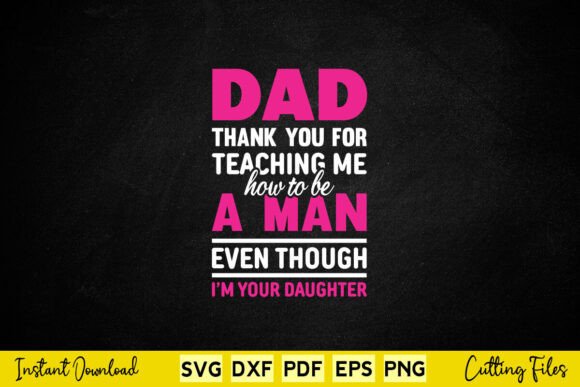
This piece falls squarely into the Crafts category, specifically under Graphics intended for conversion or direct use in personalized gifts. The core theme is sentimental yet strong, targeting the demographic of fathers who value mentorship and legacy. When I first loaded the file to inspect the layout, my immediate impression was one of balanced typography. The phrase "Thank You For Teaching Me How To Be a Man" carries weight, and the visual hierarchy needs to reflect that without becoming overly dense. For embroidery, clarity is king, and this design appears to prioritize legibility, which is crucial when working with textured materials.
Real-World Application and Fabric Behavior
To truly understand the value of an embroidery file, you have to imagine it stitched out. I recently prepared a custom order for a boutique client looking for high-quality custom apparel for a Father’s Day collection. They wanted something that felt premium, not like a cheap promotional giveaway. This is where Dad Thank You for Teaching Father s Day shines if handled correctly. I envisioned this design centered on the chest of a heavyweight cotton sweatshirt or perhaps as a focal point on a durable canvas tote bag design.
The mood this design creates is respectful and warm. It does not rely on flashy cartoons or overly complex illustrations, which makes it versatile. In a real-life scenario, such as creating a personalized gift for a grandfather, the simplicity allows the sentiment to take center stage. However, the lack of heavy graphical elements means the typography must be perfect. If the letters are too thin, they will disappear into the nap of a fleece hoodie. If they are too thick, the fabric will pucker. My assessment suggests that this design works best when paired with appropriate stitch density adjustments based on the material.
Navigating Technical Challenges
While the concept is solid, there are areas where caution is required. Embroidery is unforgiving of poor planning. If you are considering this for baby embroidery items, such as a onesie or a soft blanket, you must be mindful of the hoop size and the scale of the text. Tiny lettering on stretchy fabrics is a recipe for disaster. I recommend avoiding this design on very thin, slippery materials unless you are an expert in stabilization.
For curved surfaces like caps or hats, the layout needs careful consideration. A wide horizontal design can distort when stitched over the front panel of a cap. In such cases, breaking the design into smaller segments or using an applique design technique might be necessary to reduce stitch count and bulk. Additionally, when working with dark fabrics, ensure your thread colors provide sufficient contrast. A dark grey thread on a black shirt will render the message invisible, no matter how beautiful the font is.
Another critical factor is the stabilizer. For a design with significant text, a cut-away stabilizer is often safer than tear-away, especially for garments that will undergo frequent washing. This ensures the finished product maintains its shape and the stitches do not pull through the fabric over time. Always test on scrap fabric first. Check how the satin stitch borders behave against the fill stitch areas if the design includes any graphical accents. Look for jump stitches that might need trimming and ensure the running stitch underlays are sufficient to anchor the design.
Commercial Viability for Etsy Sellers
For the Etsy seller or small shop owner, the commercial potential of Dad Thank You for Teaching Father s Day lies in its emotional resonance. Fathers’ Day is a massive sales period, and buyers are looking for items that feel thoughtful. This design fits well into the niche of holiday embroidery and legacy gifts. It can be adapted for various products beyond apparel, such as pillow covers, kitchen towels, or even framed textile art.
However, since the product description notes it is a digital product intended for printing on items like t-shirts, mugs, and stickers, we must address the elephant in the room: format compatibility. As an embroidery reviewer, I must stress that SVG files are primarily for cutting machines or printing, not directly for embroidery hoops. To use this as a digital embroidery file, you would typically need to convert it using digitizing software or ensure the seller provides native embroidery formats like PES, DST, or JEF. If the listing only offers SVG, you cannot simply load it into your embroidery machine. You must check the license and file types carefully before purchasing for commercial embroidery use.
If you are creating printable mockup assets for your online store, this graphic is excellent. It allows you to showcase what the final embroidered item could look like. But for actual stitching, verify the source. If you are digitizing it yourself from the SVG, pay attention to corner sharpness. Small details in fonts can become tangled nests of thread if the digitizing parameters are too aggressive. Keep the design assets clean and simple.
Final Verdict and Designer Notes
In conclusion, Dad Thank You for Teaching Father s Day is a strong contender for your craft business inventory, provided you navigate the technical requirements with care. It offers a professional, heartfelt aesthetic that appeals to buyers looking for quality handmade product options. It builds customer trust because it avoids clutter and focuses on a clear, powerful message.
- Test First: Always stitch out a sample on the same fabric type you intend to sell.
- Check Contrast: Use light threads on dark fabrics and vice versa to ensure readability.
- Verify Formats: Confirm if the download includes actual embroidery files or just print-ready graphics.
- Stabilize Properly: Use cut-away stabilizer for stretchy fabrics to prevent distortion.
- Scale Appropriately: Adjust the size to fit the hoop and the garment proportionally.
Whether you are creating a sweatshirt embroidery piece for a local boutique or a set of embroidered patch designs for a craft fair, this design holds up under scrutiny. It respects the medium of embroidery by relying on strong typographic structure rather than excessive detail. For the serious maker, it represents a reliable tool in your arsenal of design assets, capable of producing high-value, emotionally resonant goods that customers will cherish. Just remember, the difference between a good design and a great finished product is always in the preparation.