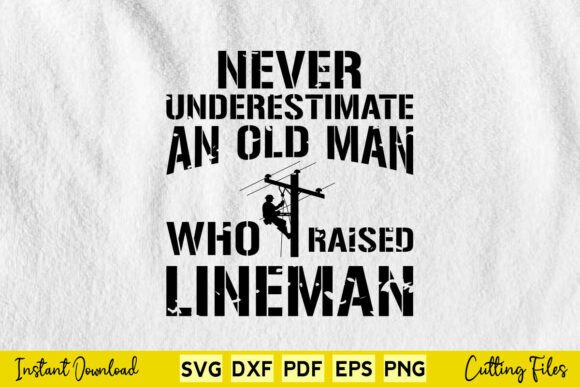
Old Man Who Raised a Lineman: A Designer’s Review
When I first pulled up the Old Man Who Raised a Lineman design on my screen, I wasn’t just looking at a graphic; I was visualizing the final stitch-out. As an embroidery designer who has spent years troubleshooting thread breaks and adjusting tension for small business owners, I approach every new asset with a critical eye. This isn’t just about whether a picture looks cute on a monitor. It is about how that image translates into thread, how it holds up on fabric, and whether it will resonate with the customer holding the finished product.
This particular piece falls squarely into the niche of pride-based family tributes, a category that performs exceptionally well in the Crafts and Graphics sectors. The theme is specific, emotional, and deeply rooted in community identity. For those of us creating handmade products or managing Etsy shops, specificity sells. But does the design hold up under the needle?
First Impressions and Visual Mood
The immediate mood of this design is one of quiet strength and legacy. It captures the relationship between a father figure and a child who has entered a demanding, essential trade. Visually, the layout tends to balance bold typography with symbolic imagery, likely featuring elements associated with electrical work or utility lines. From a design perspective, this balance is crucial. If the text overwhelms the iconography, the message gets lost. If the details are too fine, they disappear in the stitching.
I appreciate designs that tell a story without needing explanation. When a customer sees this on a sweatshirt or a tote bag, they instantly understand the narrative. It creates an emotional connection, which is the primary driver for personalized gifts. The visual personality here is rugged yet tender, making it suitable for a wide range of applications beyond just standard t-shirts.
Real-World Application Scenarios
To truly evaluate a machine embroidery design, you have to imagine it in situ. I recently considered this design for a custom order involving a heavy-duty canvas tote bag. The idea was to create a gift for a retiring lineman’s father. The bold lines of the design would stand out beautifully against the textured weave of the canvas. However, I had to consider the stitch density. A dense fill stitch on a flexible tote handle could cause puckering if not properly stabilized.
Beyond totes, this design shines on sweatshirt embroidery projects. The thicker fabric of a hoodie or crewneck provides a stable foundation for the satin stitch borders often found in this style of graphic. It also works well for embroidered patches, which can be ironed or sewn onto work jackets. For a craft business owner, offering this as a patch allows customers to customize their own gear, adding value to your digital embroidery file offerings.
Consider also the holiday embroidery market. During Father’s Day or Christmas, this design becomes a high-demand item. It fits perfectly on pillow covers for home decor or even on aprons for the dad who loves to grill. The versatility of the theme means it isn’t limited to one season or one type of garment.
Technical Considerations for Stitching
While the concept is strong, the execution requires attention to detail. One of the first things I check is the potential for tiny lettering. In many SVG-based designs converted for embroidery, small text can become illegible if the stitch count is too low or the needle size is too large. Before running this on a client’s expensive garment, I always recommend testing the design on scrap fabric. This allows you to inspect small details and ensure that any fine lines in the lineman imagery do not turn into a tangled mess of thread.
Fabric texture plays a massive role here. On smooth cotton, the design will look crisp. On textured fabrics like terry cloth or fleece, you may need to adjust the stitch density or use a topping stabilizer to prevent the stitches from sinking into the pile. For stretchy fabrics, such as performance tees, a cut-away stabilizer is non-negotiable to maintain the shape of the design after washing.
Dark fabric presents another challenge. If the design relies on light thread colors for contrast, you must ensure there is adequate underlay stitching to prevent the dark fabric from showing through the fill stitch areas. I often test these designs in black and white mockups first to gauge contrast levels before selecting my final thread colors.
Commercial Viability and Brand Consistency
For Etsy sellers and small shop owners, the commercial viability of a design depends on its professionalism. A sloppy stitch-out reflects poorly on your brand. This design, when properly digitized and stitched, conveys quality. It enhances customer trust because it shows you understand the nuances of the trade being honored. It is not just a generic graphic; it is a respectful nod to a specific profession.
When using this as a digital product th, ensure you are clear about licensing. Most designers allow you to sell finished physical items, such as t-shirts or mugs, but restrict the resale of the digital embroidery file itself. Always confirm licensing before selling finished items or digital products to avoid legal issues. Clear communication with your buyers about what they are purchasing—whether it is a physical handmade product or a digital file for their own machines—is key to maintaining good reviews and repeat business.
Practical Designer Notes
If you are planning to use Old Man Who Raised a Lineman in your next project, keep these practical tips in mind:
- Check Hoop Size: Ensure the design fits within your machine’s hoop capabilities without requiring excessive re-hooping, which can lead to misalignment.
- Stabilizer Selection: Use a medium-weight cut-away stabilizer for garments that will be washed frequently. For hats or curved surfaces, use a stiff backing to support the design.
- Thread Contrast: Choose thread colors that pop against the fabric. High contrast improves readability, especially from a distance.
- Test Stitch-Out: Never skip the test run. Check for thread breaks, jumps, and density issues on a similar fabric to your final product.
- License Verification: Double-check the terms of use for the digital embroidery file to ensure compliance with commercial use policies.
In conclusion, this design offers a compelling mix of emotional resonance and visual appeal. It is a solid addition to any designer’s library of assets, provided it is executed with care and technical precision. Whether you are creating a personalized gift for a family member or stocking your small shop with unique apparel, this design has the potential to become a bestseller if treated with the professional respect it deserves.