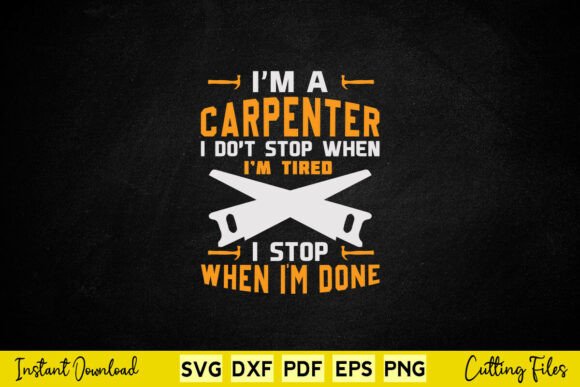
Carpenters Work Till They Are Done: A Designer’s Review
As a designer who has spent years translating digital concepts into thread, I have learned that the difference between a cute graphic and a sellable machine embroidery design often comes down to practical application. When I first encountered Carpenters Work Till They Are Done, my initial reaction was not just about the humor or the sentiment, but about its structural integrity on fabric. This piece falls squarely into the Crafts category, specifically under Graphics, but its real value lies in how it translates from a screen to a tangible finished product.
First Impressions and Visual Personality
The phrase itself carries a weight of dedication and craftsmanship, which resonates deeply with the target audience for this type of work. Visually, the layout suggests a bold, straightforward aesthetic. For an embroidery project, this is promising. Complex, wispy fonts often disappear into the texture of the fabric, but a statement like this usually demands clarity. The mood it creates is one of rugged reliability, making it an ideal candidate for items that see daily use.
When evaluating any digital embroidery file, I look for balance. Does the text flow well? Is there enough negative space to prevent the stitches from merging into a blob? With Carpenters Work Till They Are Done, the typography appears robust enough to handle the physical limitations of thread. It feels like a design that respects the medium, rather than forcing a print-style graphic onto a sewing machine.
Real-World Application: The Custom Apron Test
To truly understand the potential of this design, I imagined a specific real-life scenario. A local carpentry shop owner wanted custom gifts for his team before the holiday rush. He needed something durable, professional, and slightly humorous. I visualized Carpenters Work Till They Are Done stitched onto a heavy-duty canvas apron.
In this context, the design shines. The bold lettering would stand out against the neutral tone of the canvas. Using a satin stitch for the smaller details and a fill stitch for larger elements could provide the necessary texture and durability. The result would not just be a gift; it would be a badge of honor for the workers. This kind of personalized gift builds brand loyalty and shows attention to detail that mass-produced items simply cannot match.
Beyond aprons, this design is versatile. It would work exceptionally well as a sweatshirt embroidery piece for cooler months, where the thickness of the garment supports heavier stitch counts. It could also serve as a standout feature on a tote bag design, appealing to DIY enthusiasts and makers who appreciate the grind of creative work.
Navigating Technical Challenges
However, enthusiasm must always be tempered with technical caution. Not every fabric behaves the same way. If you are planning to use this on a stretchy fabric like a jersey t-shirt, you must be mindful of distortion. The horizontal spread of the text requires a stable base. Without proper stabilization, the letters might pull apart after the first wash.
I recommend using a cut-away stabilizer for garments that will undergo frequent laundering, such as work shirts or hoodies. For decorative items like pillow covers or wall hangings, a tear-away stabilizer might suffice, but always test first. Additionally, consider the hoop size. While the design is likely scalable, shrinking it too much for a small cap or baby item could render the text illegible. Tiny lettering in embroidery is risky; threads have thickness, and intricate corners can become messy if the design is reduced beyond its intended limits.
Dark fabrics present another challenge. If you are stitching this onto navy or black apparel, ensure your thread colors have high contrast. A light gray or white thread would pop, but you must check for coverage. Sometimes, a dense fill is needed to prevent the fabric color from showing through the stitches, which increases the stitch density and potentially the stiffness of the final product.
Commercial Viability for Etsy Sellers
For Etsy sellers and small business owners, this design offers strong commercial potential. The niche of trade-specific humor is evergreen. Carpenters, woodworkers, and general contractors are always looking for unique gear that reflects their identity. By offering this as part of a custom apparel line, you tap into a market that values authenticity.
When listing this as a handmade product, presentation is key. Use high-quality printable mockup images to show customers how the design looks on different items. Show it on a rugged flannel shirt, a sturdy tote, and perhaps even a coffee mug if you are expanding into sublimation or vinyl, though our focus here is embroidery. Highlighting the durability and the professional finish can justify a higher price point.
It is crucial to remember that this is a digital product. As the description notes, it is available for download to print on various items. However, for embroidery, you must ensure you have the correct file formats compatible with your machine. Always verify the license terms. Some designers allow unlimited commercial use for finished physical goods, while others restrict the sale of the digital file itself. Clarifying this protects your craft business and maintains professional integrity.
Practical Designer Notes
Before committing to a large batch of orders, follow these steps to ensure quality:
- Test on Scrap Fabric: Always run a test stitch-out on the same type of fabric you intend to use for the final product. This reveals any tension issues or registration errors.
- Check Thread Contrast: View your design in black and white on your computer screen. If the details disappear in grayscale, they may lack definition in real life.
- Inspect Small Details: Zoom in on the digital file. Look for tiny jumps or excessive trims that could weaken the thread or cause nesting.
- Confirm Hoop Size: Ensure the design fits comfortably within your hoop with room for stabilization tape.
- Review Stitch Density: If the design feels too stiff after stitching, consider reducing the density in your editing software, if permitted by the license.
In conclusion, Carpenters Work Till They Are Done is more than just a funny phrase; it is a versatile asset for any designer working in the realm of commercial embroidery. Its strength lies in its clarity and thematic resonance. Whether you are creating a holiday embroidery gift for a family member or stocking your small shop product line with trade-themed apparel, this design holds up under scrutiny. Just remember to respect the technical constraints of the medium, choose your materials wisely, and let the quality of your stitching speak for itself.